When a child is diagnosed with cancer, the family hears words they never expected to hear. Chemotherapy. Cancer medicines. Scans. Hospitalisation. Surgery. And then comes another frightening question:
“How much will the treatment cost?”
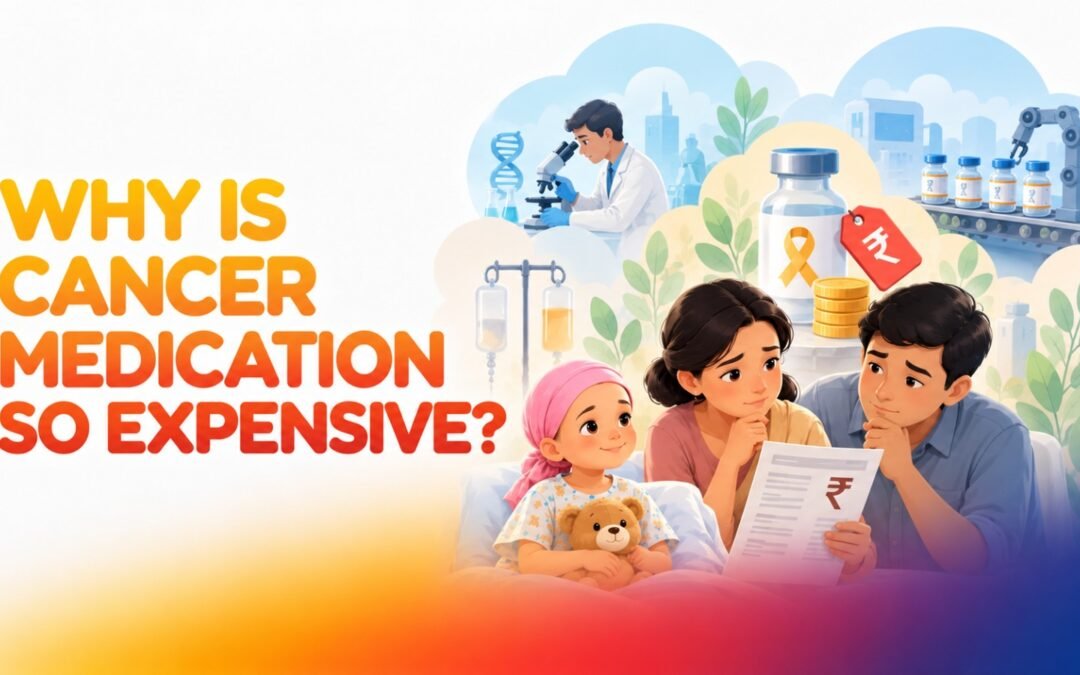
For many families, the cost of cancer treatment can feel almost as overwhelming as the diagnosis itself. But why are cancer medicines so expensive?
The answer is more complicated than simply saying, “Cancer medicines cost a lot to make.”
Cancer Treatment Is Not Just One Medicine
Cancer is not one disease.
There are different types of childhood cancer, and each may require a different treatment plan.
Depending on the diagnosis, treatment may involve chemotherapy drugs, targeted therapy, immunotherapy, supportive medicines, blood products, surgery, radiation therapy and regular investigations.
Some medicines may be needed for weeks.
Others may be required for months.
And treatment can change depending on how the child responds.
So the final medical bill is often a combination of many different expenses.
Research Comes With a Cost
Before a new cancer medicine reaches patients, it goes through years of scientific research, laboratory development, clinical trials, safety testing and regulatory review.
That process requires doctors, researchers, laboratories, technology and thousands of hours of work.
For some newer and highly specialised cancer treatments, these development costs can contribute to higher prices.
But research and development is only one part of the story.
Some Cancer Medicines Are Highly Specialised
Certain cancer medicines are manufactured for specific cancers or patient groups. Some require complex manufacturing processes, specialised facilities or strict storage and transportation conditions.
This can make them significantly more expensive than commonly used medicines. And when fewer patients need a particular medicine, the production scale can also be smaller.
The Hidden Cost of Cancer Treatment
Sometimes, when people talk about the cost of cancer treatment, they only think about the medicine.
But families may also have to manage:
- Diagnostic tests
- Biopsies
- Blood tests
- Scans
- Hospitalisation
- Surgery
- Travel to treatment centres
- Accommodation
- Lost wages
- Nutritional support
- Follow-up care
For families with limited financial resources, even one additional expense can become difficult to manage.
When Treatment Becomes a Financial Struggle
This is where cancer becomes more than a medical issue. It becomes a social issue.
Imagine being told that your child needs treatment-and simultaneously worrying about whether you can afford the next cycle of chemotherapy.
The family may have to borrow money, sell assets, stop working temporarily or depend on relatives and community support. This financial pressure is often referred to as financial toxicity when the cost of healthcare creates serious financial hardship for patients and families.
For childhood cancer, the impact can extend to the entire household.
So What Can We Do?
Cancer care should not become a situation where a family’s financial position determines whether a child gets access to essential treatment.
That is why charities, NGOs, hospitals, donors and community organisations can play an important role in supporting families who need financial assistance.
At Happy Kids Foundation, support for children facing serious illnesses can help families manage some of the financial barriers surrounding treatment and care.
Because behind every medical bill is a family.
And behind every treatment plan is a child waiting for the chance to get better.
The Bigger Question
The question isn’t only:
“Why is cancer medicine so expensive?”
We also need to ask:
“How can we make essential cancer treatment more accessible to every child who needs it?”
Because cancer may be a medical problem.
But access to cancer care is a social responsibility too.