
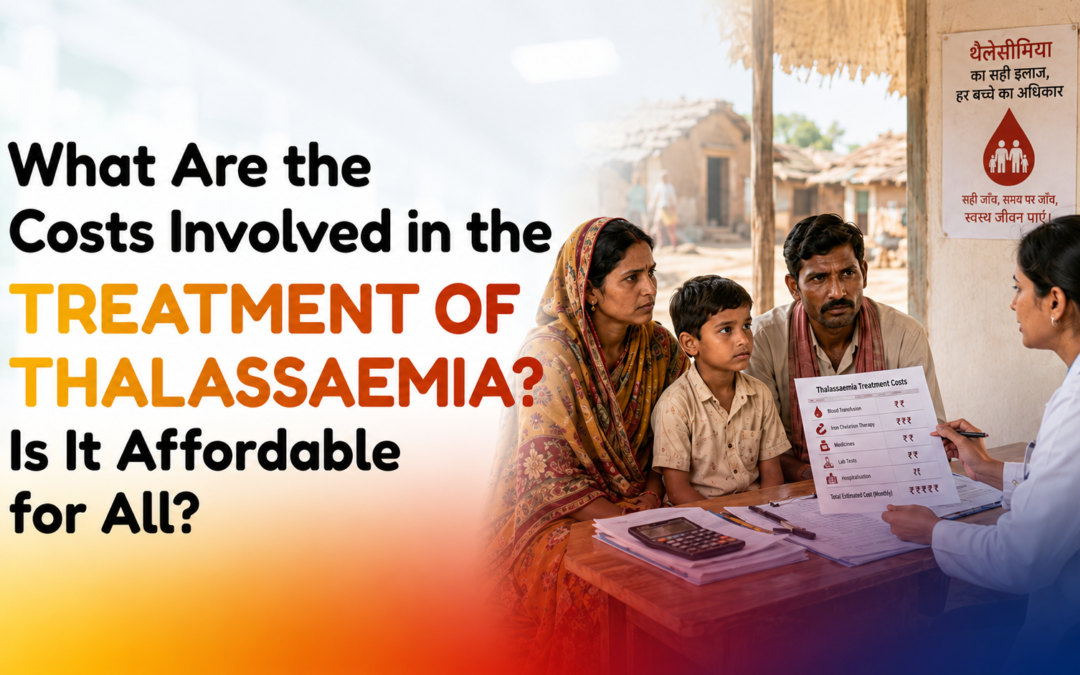
Understanding the Financial Challenges Faced by Families Managing Thalassaemia
For many families, the diagnosis of Thalassaemia brings not only emotional stress, but also a long-term financial challenge.
Unlike short-term illnesses, Thalassaemia treatment requires lifelong and continuous medical care. From regular blood transfusions to chelation therapy and investigations, the expenses involved can become overwhelming for many households — especially those from rural and economically vulnerable backgrounds.
One of the biggest realities in India today is that while treatment options for Thalassaemia in children have improved significantly, affordability and accessibility still remain major concerns for several families.
This is where awareness, support systems, and non-profit initiatives become extremely important.
Why Does Thalassaemia Require Long-Term Treatment?
Thalassaemia Major is a genetic blood disorder in which the body cannot produce healthy hemoglobin properly.
Children diagnosed with Thalassaemia often require:
- Regular blood transfusions
- Ongoing monitoring
- Chelation therapy
- Frequent investigations
- Long-term pediatric hematology care
Because treatment is continuous, the overall financial burden gradually increases over time.
What Are the Major Costs Involved in Thalassaemia Treatment?
The cost of managing Thalassaemia in children is not limited to one medicine or one procedure.
Families often need to manage multiple recurring expenses.
1. Regular Blood Transfusions
Children with Thalassaemia Major may require blood transfusions every few weeks.
This may involve:
- Hospital visits
- Blood arrangement costs
- Admission charges
- Laboratory testing
- Travel expenses
Even when blood itself is available through donation, associated medical expenses continue to add up.
2. Chelation Therapy Costs
Repeated blood transfusions can lead to iron overload in Thalassaemia.
This makes chelation therapy in Thalassaemia extremely important.
Chelation medicines help remove excess iron and reduce damage to:
- Heart
- Liver
- Hormonal organs
However, long-term chelation therapy can become financially difficult for many families, especially when treatment continues for years.
3. Diagnostic & Monitoring Investigations
Children undergoing Thalassaemia treatment require regular investigations such as:
- Blood tests
- Ferritin monitoring
- Liver function tests
- Cardiac evaluation
- Growth assessment
These investigations are important to monitor treatment effectiveness and identify complications early.
4. Travel & Accommodation Expenses
Families from rural areas often travel repeatedly to urban centers for:
- Pediatric hematology consultations
- Blood transfusions
- Follow-up treatment
Over time, transportation and accommodation costs become a major burden.
5. Loss of Income for Caregivers
Parents frequently need to:
- Miss work
- Travel long distances
- Spend extended time in hospitals
This creates indirect financial stress for the family.
Is Thalassaemia Treatment Affordable for Every Family?
Unfortunately, not always.
While healthcare access has improved, affordability remains a major challenge in India.
Families from:
- Rural backgrounds
- Low-income households
- Remote areas
often struggle to maintain regular treatment schedules because of financial limitations.
This can lead to:
- Interrupted treatment
- Delayed transfusions
- Incomplete chelation therapy
- Increased complications
Why Is Continuous Treatment So Important?
Irregular treatment increases the risk of:
- Severe anemia
- Organ damage
- Delayed growth
- Reduced quality of life
Consistency is one of the most important parts of Thalassaemia care.
Children perform better when:
- Blood transfusions are timely
- Chelation therapy is regular
- Follow-up monitoring continues properly
How Are NGOs and Non-Profits Supporting Families?
Organizations like the Happy Kids Foundation are helping reduce the burden on families by providing:
- Blood transfusion support
- Access to chelation medicines
- Counselling and guidance
- Long-term treatment coordination
- Awareness and support programs
These initiatives help ensure that children continue receiving care despite financial challenges.
Why Is Community Participation Important?
Long-term illnesses like Thalassaemia require strong community support systems.
This includes:
- Blood donation drives
- Awareness campaigns
- NGO collaborations
- Financial support initiatives
- Healthcare accessibility programs
Every contribution helps improve continuity of care for children.
Can Awareness Help Reduce the Burden?
Absolutely.
Awareness improves:
- Early diagnosis
- Preventive screening
- Timely treatment
- Access to support systems
It also helps families seek help earlier instead of delaying treatment because of fear or lack of information.

Final Thoughts from Happy Kids Foundation
The challenge of Thalassaemia treatment is not only medical.
For many families, it is also financial, emotional, and logistical.
No child should lose access to treatment because of affordability barriers.
Improving outcomes for children with Thalassaemia requires:
- Better awareness
- Affordable access to care
- Stronger support systems
- Long-term community participation
Because healthcare becomes meaningful only when it is accessible to everyone who needs it.