
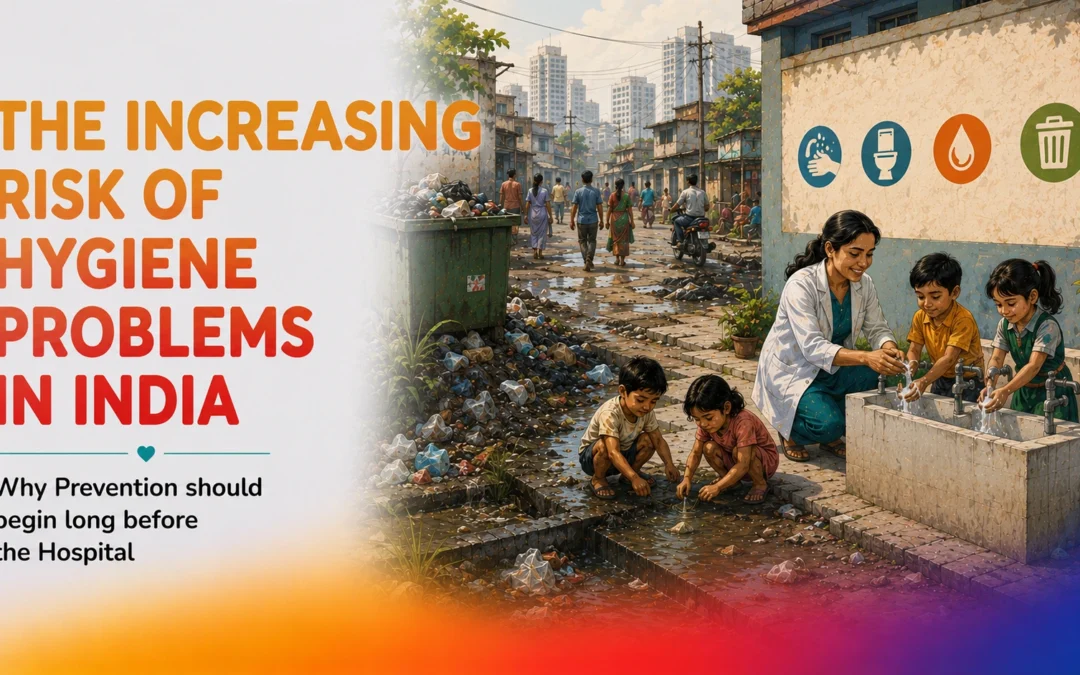
How can something as basic as hygiene become a serious health problem?
Across India, poor hygiene continues to contribute to millions of preventable infections every year—especially among children. From diarrhoeal diseases and respiratory infections to skin conditions and parasitic illnesses, hygiene remains one of the biggest yet most overlooked public health challenges.
The good news?
Unlike many diseases, hygiene-related illnesses are often preventable.
And that’s exactly why organizations like Happy Kids Foundation believe that improving hygiene awareness is just as important as providing medical treatment. Because the healthiest communities are built through prevention, education, and access—not just medicines.
Hygiene Isn’t Just About Being Clean
When people hear the word hygiene, they often think of bathing or washing hands. But hygiene is much bigger than that.
It includes:
- Safe drinking water
- Clean toilets
- Proper waste disposal
- Handwashing with soap
- Menstrual hygiene
- Food safety
- Oral hygiene
- Clean surroundings
- Personal cleanliness
- Environmental sanitation
Each of these plays a role in preventing disease.
When one breaks down, health risks increase.
Why Is Hygiene Becoming a Bigger Concern?
India has made remarkable progress in sanitation and public health over the last decade.
Yet rapid urbanization, overcrowded cities, pollution, inadequate waste management, and unequal access to clean water continue to create hygiene challenges.
In many communities, especially underserved and densely populated areas, families still struggle with:
- Limited access to clean water
- Poor sanitation facilities
- Overflowing garbage
- Open drains
- Mosquito breeding
- Inadequate health education
These aren’t just environmental issues.
They’re health issues.
Children Are the Most Vulnerable
Adults generally have stronger immune systems. Children may not. Their immune systems are still developing, making them more susceptible to infections caused by poor hygiene. Common hygiene-related illnesses among children include:
- Diarrhoea
- Typhoid
- Hepatitis A
- Worm infestations
- Skin infections
- Respiratory infections
- Eye infections
- Food poisoning
For young children, even a simple diarrhoeal illness can quickly become dangerous if not treated promptly. That’s why prevention matters so much.
One Missed Handwash Can Have a Chain Reaction
Imagine this. A child skips washing their hands before lunch. They eat contaminated food. They develop diarrhoea. They miss school. Their parents miss work to care for them. Medical expenses increase. The family’s income suffers.
All because of something that could have been prevented in less than 30 seconds. Hygiene doesn’t just affect health. It affects education, livelihoods, and quality of life.
Unsafe Water Is Still a Silent Threat
Clean drinking water is something many people take for granted. Unfortunately, not every family has reliable access to it. Contaminated water can spread diseases like:
- Cholera
- Typhoid
- Hepatitis A
- Dysentery
- Acute diarrhoeal diseases
Children are especially vulnerable because dehydration develops much faster in them. Improving access to safe water isn’t simply an infrastructure goal. It’s a healthcare priority.
Poor Sanitation Impacts More Than You Think
Open drains. Overflowing waste. Improper sewage disposal.
These conditions create ideal environments for bacteria, viruses, flies, rodents, and mosquitoes. As a result, communities may see higher rates of:
- Dengue
- Malaria
- Chikungunya
- Gastrointestinal infections
- Skin diseases
Improving sanitation isn’t only about making neighbourhoods look cleaner. It’s about making them safer.
Hygiene Education Is Just as Important as Healthcare
Building toilets is important. Providing clean water is essential.
But education is what ensures these resources are used effectively. Children who learn healthy hygiene habits often carry them into adulthood. Simple lessons like:
- Washing hands before eating
- Drinking safe water
- Covering coughs and sneezes
- Keeping nails trimmed
- Brushing teeth twice daily
- Keeping surroundings clean
can reduce the spread of infections within entire families. Knowledge spreads just as quickly as germs—but with much better results.
Schools Play a Huge Role
Schools are more than places for learning mathematics or science. They’re where lifelong habits are formed.
When schools encourage:
- Regular handwashing
- Clean drinking water
- Hygienic toilets
- Safe food practices
- Health awareness sessions
students take these habits back home. One educated child often becomes a health ambassador for an entire family.
Conclusion
The increasing risk of hygiene problems in India isn’t simply about cleanliness. It’s about protecting children. It’s about preventing disease before it starts. It’s about giving every family the opportunity to live healthier lives. Good hygiene may seem like a small daily habit. But across communities, those small habits create enormous change.
When families, schools, healthcare workers, NGOs, businesses, and communities work together, prevention becomes stronger than disease. And that’s the future we should all be working towards.