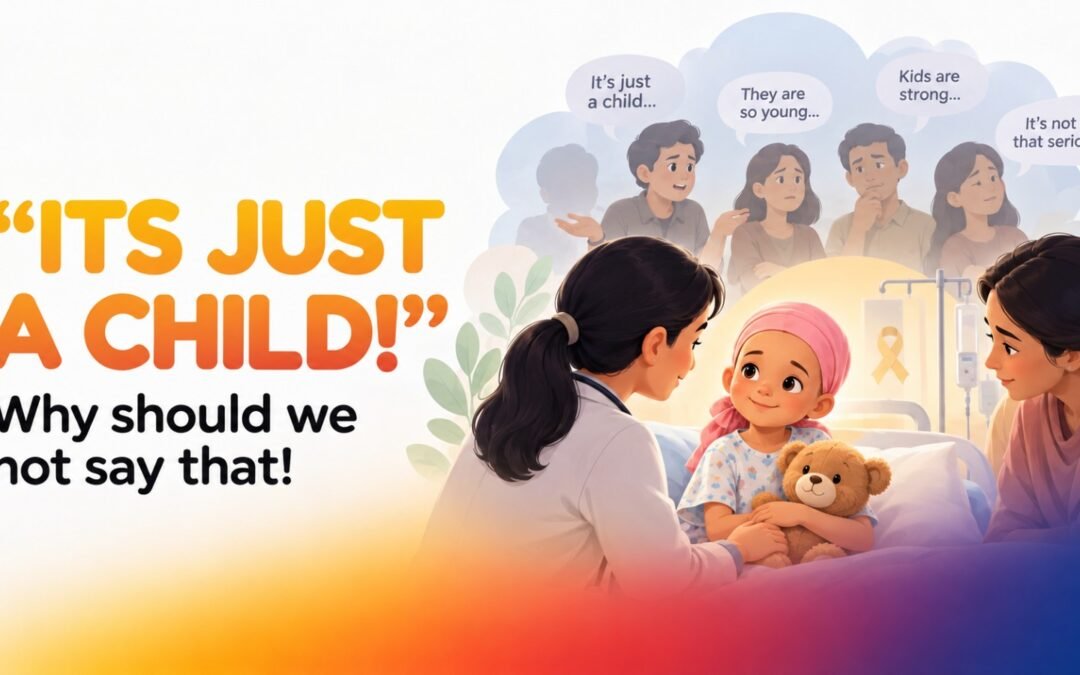
“It’s just a child.”
It may sound like a harmless sentence.
But when a child is living with cancer, a serious blood disorder, or another life-threatening illness, those four words can unintentionally make their pain feel smaller than it really is.
A child may be small.
Their illness is not. Their pain is not. Their treatment is not. And their life is certainly not.
A Child Is Not “Just” Anything
Children can develop serious illnesses just like adults.
Childhood cancer can include leukemia, lymphoma, brain tumors, bone tumors and other pediatric cancers. Treatment may involve chemotherapy, surgery, radiation therapy, blood transfusions, prolonged hospitalization and months or even years of follow-up care.
For parents, a child’s diagnosis can completely change everyday life.
School stops.
Playtime changes.
Hospital visits become routine.
And suddenly, a family that was planning birthdays, exams and holidays is planning around cancer treatment and medical appointments.
So when someone says, “It’s just a child,” the problem isn’t only the words.
It is the idea behind them.
“They Are Young. They’ll Be Fine.”
Children are incredibly resilient.
But resilience does not mean they don’t suffer.
A child undergoing cancer treatment may experience:
- Pain and treatment-related side effects
- Fear of injections and procedures
- Long hospital stays
- Missing school and friends
- Changes in appearance
- Emotional distress
- Financial stress within the family
And sometimes, children understand much more than adults realise.
They may not know the medical terminology.
But they know when their parents are worried.
They know when something hurts.
And they know when life suddenly feels different.
Don’t Reduce the Child to Their Illness Either
There is another side to this conversation. A child with cancer is not only a cancer patient. They are still someone’s son or daughter. Someone’s best friend. Someone who loves cartoons, football, dancing, drawing, video games or chocolate.
Their diagnosis is part of their story. It is not their entire identity. Instead of saying, “It’s just a child,” we can say:
“It’s a child who deserves every possible chance to heal, grow and live their life.”
Compassion Should Never Be Dismissive
Sometimes people use phrases like this because they don’t know what to say. That is understandable.
But when a child is seriously ill, the better response is simple: Listen. Acknowledge. Support. Don’t minimise.
Even a few thoughtful words can make a difference to a family going through pediatric cancer treatment or managing a serious childhood illness.
Every Child’s Life Matters
Whether a child is three, thirteen or eighteen, their life has value.
Their treatment matters.
Their education matters.
Their emotional wellbeing matters.
Their future matters.
And their family deserves support—not dismissal.
At Happy Kids Foundation, supporting children facing serious illnesses means looking beyond the diagnosis and recognising the child behind it.
Because they are not “just a child.”
They are a child with a whole life ahead of them. And that life matters.