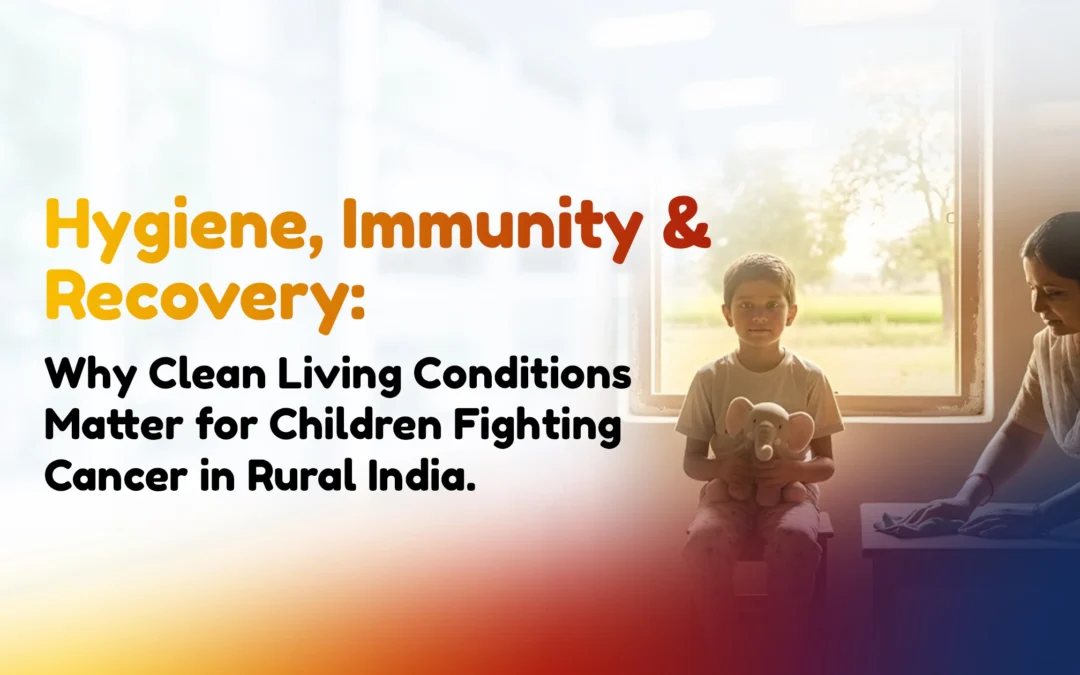
For a child undergoing cancer treatment, medicines alone do not determine recovery — hygiene does.
Cancer treatments like chemotherapy, radiation, and immunotherapy temporarily weaken the immune system. This means a child becomes far more vulnerable to infections that a healthy child could easily fight off.
In rural regions of Marathwada and Maharashtra, where access to clean water, sanitation, and infection-controlled living environments is often limited, this challenge becomes even more serious.
At Happy Kids Foundation, we have observed that improving hygiene practices at home can significantly reduce treatment complications, hospital admissions, and infection-related setbacks in children battling cancer or blood disorders.
Why Immunity Drops During Cancer Treatment

When a child receives cancer treatment:
- White blood cell count decreases
- Body’s defense against infections weakens
- Minor germs can cause serious illness
- Recovery becomes slow if infections recur
- Even common cold or dirty water exposure may need hospitalization
This is why infection prevention = life protection during treatment.
Hygiene Challenges in Rural Households
Children in rural areas face added exposure to:
- Unfiltered drinking water
- Open defecation areas
- Cattle and livestock surroundings
- Soil-based infections
- Limited sanitation access
- Lack of mosquito control
- Overcrowded living spaces
These are silent infection risks — especially critical for children with weak immunity.
Essential Hygiene Practices Every Family Must Follow
1. Safe Drinking Water
✔ Use boiled and filtered water
✔ Store in clean, closed containers
✔ Avoid roadside or open well water
2. Clean Food & Nutrition Habits
✔ Wash fruits and vegetables thoroughly
✔ Avoid raw, uncovered, or outside food
✔ Serve freshly prepared, warm meals
3. Personal Hygiene for the Child
✔ Daily bathing with clean water
✔ Frequent handwashing with soap
✔ Keep nails short and clean
✔ Avoid contact with sick individuals
4. Clean Surrounding Environment
✔ Sweep and damp-wipe floors regularly
✔ Keep animals away from child’s living space
✔ Ensure toilets are cleaned and used safely
5. Infection Control During Treatment
✔ Wear a mask in crowded places
✔ Avoid stagnant water to prevent mosquito infections
✔ No direct contact with soil, dust, or construction areas
How to Create a “Safe Recovery Zone” at Home
Even in limited-resource settings, parents can create a safer recovery environment by:
- Identifying the cleanest room for the child
- Limiting visitors during treatment cycles
- Ensuring good ventilation
- Disinfecting high-touch surfaces
- Keeping a separate cup, plate, towel for the child
- Washing hands before every meal and medicine
Small hygiene habits can prevent big health setbacks.
Common Hygiene Mistakes to Avoid
|
What to Avoid |
Why |
|
Eating outside food |
High risk of bacterial infection |
|
Playing in soil or stagnant water |
Risk of fungal and parasitic infections |
|
Sharing utensils |
Germ transfer |
|
Ignoring fever until “it worsens” |
Minor infections escalate quickly |
|
Using untreated water |
Causes stomach infections, dehydration, weakness |
How Hygiene Strengthens Treatment Outcomes
Better hygiene contributes to:
✔ Fewer infections
✔ Fewer hospital visits
✔ Smooth chemotherapy cycles
✔ Stronger immunity during recovery
✔ Faster healing and better nutrition absorption
✔ Better overall quality of life
Hygiene becomes a treatment companion, not just a habit.
Happy Kids Foundation’s Role in Hygiene & Recovery Awareness
Happy Kids Foundation works to:
🔸 Educate rural families on infection prevention
🔸 Conduct hygiene awareness sessions in villages
🔸 Guide families on creating safer recovery spaces at home
🔸 Counsel caregivers on day-to-day prevention practices
🔸 Reduce treatment interruptions caused by avoidable infections
Our mission is not only treatment support — it is teaching families how to protect every day of their child’s recovery journey.
A Message to Every Parent
You may not control the disease,
but you can control the environment that protects your child from infections.
Clean water. Clean hands. Clean food. Clean surroundings.
These 4 pillars can save as many lives as medicine itself.