
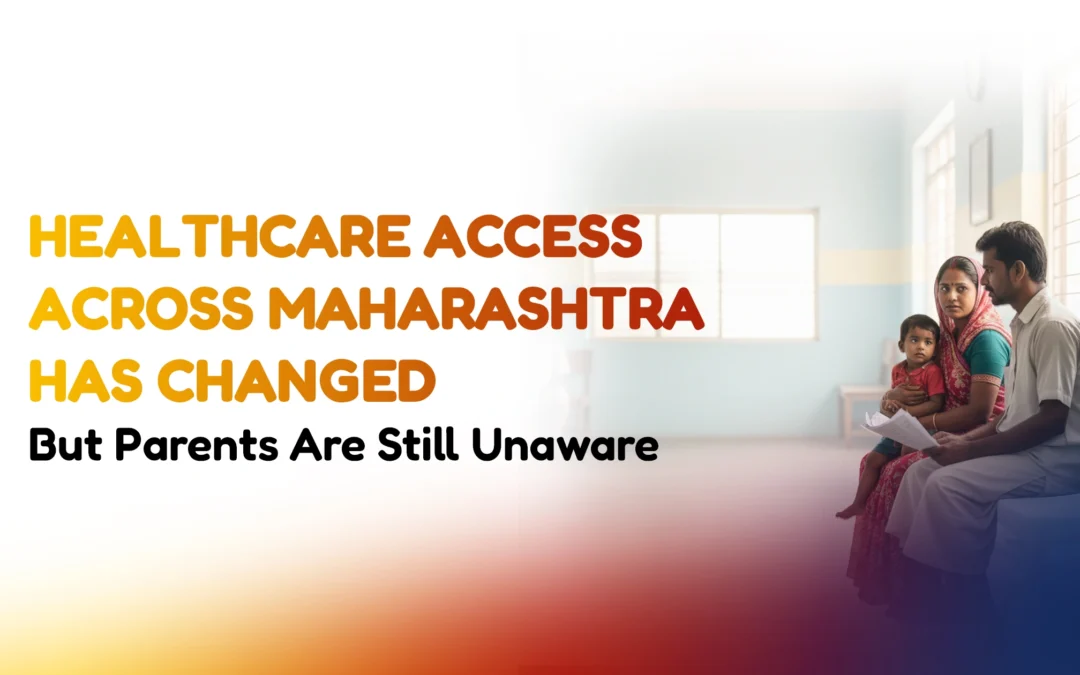
Over the last decade, healthcare infrastructure across Maharashtra has improved significantly. Advanced diagnostics, specialised doctors, and structured treatment pathways are no longer limited to a few big cities. Yet, despite this progress, many parents—especially in rural and semi-urban areas—continue to act as if nothing has changed.
At Happy Kids Foundation, one reality is seen repeatedly: families often delay seeking care, travel unnecessarily far, or miss early intervention—not because services don’t exist, but because they are unaware that access has improved closer to home.
This gap between availability and awareness continues to affect children who need timely care the most.
How Healthcare Access Has Actually Changed
Contrary to common belief, Maharashtra today has:
- Better diagnostic facilities across districts
- Availability of specialised paediatric care
- Structured referral systems
- Improved hospital infrastructure
- Access to long-term treatment and follow-up
Many conditions that once required travel to distant metros can now be evaluated, guided, and managed much earlier within the state.
Why Parents Still Believe “Good Treatment Is Only in Big Cities”
Despite these changes, many parents still believe:
- “Serious treatment is only possible in metros”
- “Rural or regional centres are not equipped”
- “Specialists are not available nearby”
- “Quality care means long-distance travel”
These beliefs are often passed down through:
- Word of mouth
- Old experiences
- Fear-driven advice
- Misinformation
As a result, families either delay care or exhaust themselves travelling unnecessarily.
The Hidden Cost of This Lack of Awareness
When parents are unaware of improved access, several problems arise.
1. Delayed Diagnosis
- Symptoms are ignored longer
- Early warning signs are missed
- Conditions progress silently
Early diagnosis often becomes late intervention.
2. Unnecessary Travel and Financial Stress
Families may:
- Travel long distances repeatedly
- Spend on transport and accommodation
- Lose daily wages
- Experience physical exhaustion
All of this adds stress without improving outcomes.
3. Emotional Fatigue for the Child
Repeated travel and hospital visits:
- Disrupt routine
- Increase anxiety
- Reduce emotional stability
- Affect school and social life
Children need stability during treatment, not constant upheaval.
Why Awareness Has Not Kept Pace With Infrastructure
Healthcare systems can evolve faster than public awareness.
Reasons include:
- Limited access to accurate information
- Dependence on informal advice
- Fear of complex hospital systems
- Lack of guidance on where to begin
Without someone to connect families to the right pathways, progress remains underutilised.
How Early Guidance Changes Everything
When parents receive early guidance:
- They understand where to start
- They reach the right specialist sooner
- They avoid unnecessary delays
- They plan treatment better
- They reduce emotional and financial stress
This guidance is often the missing link between access and action.
The Role of Happy Kids Foundation in Bridging This Gap
Happy Kids Foundation works to close the awareness gap by:
- Helping families understand available options
- Guiding them toward appropriate care pathways
- Reducing fear associated with hospitals
- Encouraging early and informed decisions
- Preventing unnecessary travel and delay
The foundation acts as a navigator, helping families use the healthcare access that already exists.
Why This Matters More for Rural Maharashtra
In rural areas, parents often face:
- Information gaps
- Limited confidence in decision-making
- Dependence on outdated advice
- Fear of high costs
By improving awareness, families can:
- Seek help earlier
- Avoid crisis-driven decisions
- Use healthcare resources effectively
- Focus on the child’s recovery rather than logistics
What Parents Can Do Differently Today
Instead of waiting or travelling blindly, parents should:
- Seek reliable guidance early
- Ask about options closer to home
- Understand referral pathways
- Avoid assuming that distance equals quality
- Reach out for support when unsure
The first step is often not treatment—but knowing where to begin.
A Common Reflection From Families
Many families later say:
- “We didn’t know help was available nearby.”
- “We thought big cities were our only option.”
- “We wasted time because we lacked information.”
Awareness could have changed their journey earlier.
Final Thought
Healthcare access across Maharashtra has moved forward—but awareness has not kept the same pace.
When parents are informed, children benefit sooner.
When guidance is available, delays reduce.
When awareness improves, outcomes improve.
Bridging this gap is not just about building hospitals—it is about helping families find their way to care, on time.