
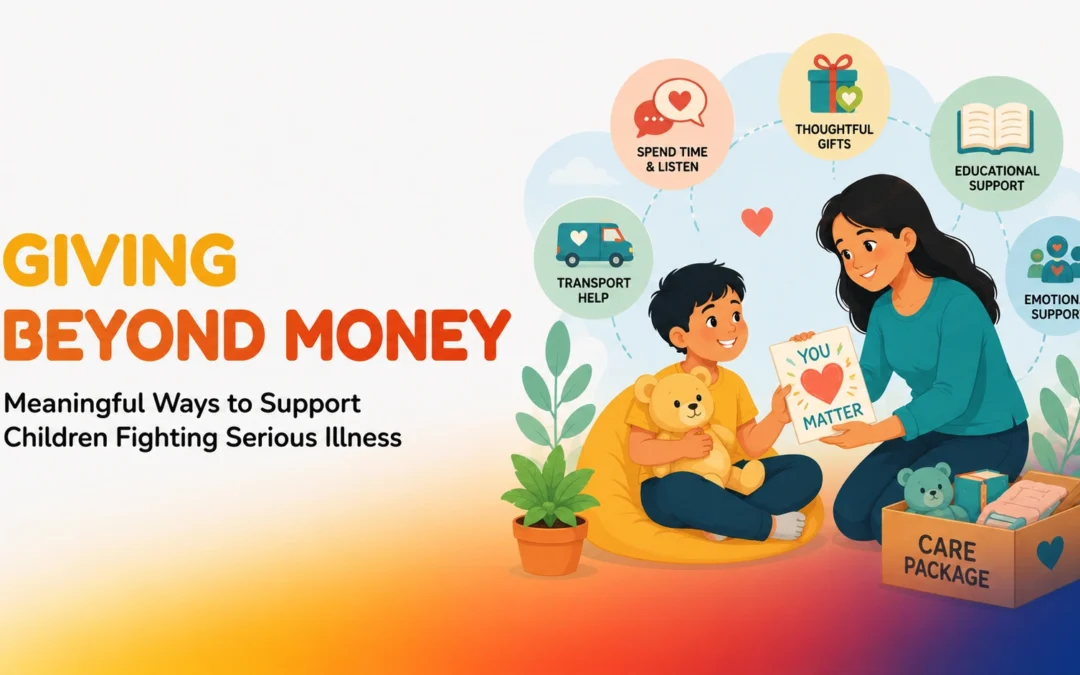
When people think about helping children with serious illnesses, the first thing that often comes to mind is financial donations.
Financial support is undoubtedly important. It helps fund treatment, medications, investigations, accommodation, nutrition, and other essential services that children and families may need during difficult times.
But meaningful support is not measured only by money.
Every day, children battling cancer, blood disorders, chronic illnesses, and other serious medical conditions benefit from the generosity, compassion, and involvement of people who contribute in many different ways.
The truth is simple: you do not need to make a financial contribution to make a meaningful difference.
Sometimes, your time, effort, voice, or willingness to help can be just as valuable.
Why Support Matters Beyond Treatment
Serious illnesses affect far more than a child’s physical health.
Families often face:
- Emotional stress
- Financial pressure
- Disrupted routines
- Educational challenges
- Travel and accommodation difficulties
- Caregiving responsibilities
During these challenging periods, support from the community can ease burdens and remind families that they are not facing the journey alone.
Every act of kindness contributes to a stronger support system around the child and family.
Donate Blood and Save Lives
One of the most powerful ways to support children with serious illnesses is through regular blood donation.
Children undergoing cancer treatment, managing blood disorders such as thalassemia, recovering from surgery, or facing medical emergencies often depend on blood transfusions.
A single blood donation can help multiple patients through the separation of blood components such as:
- Red blood cells
- Platelets
- Plasma
Regular donors play a vital role in ensuring that children have access to the blood products they need when treatment depends on them.
For many children, blood donation is not simply helpful—it is lifesaving.
Volunteer Your Time and Skills
Time is one of the most valuable gifts a person can offer.
Healthcare-focused nonprofits and support organizations often rely on volunteers to assist with:
- Awareness campaigns
- Community outreach programs
- Fundraising events
- Administrative support
- Patient and family assistance initiatives
- Educational activities
Whether you contribute a few hours each month or participate in specific projects, volunteering helps organizations extend their impact and reach more families in need.
Professional skills such as design, communication, teaching, technology, legal guidance, or event management can also create meaningful value for nonprofit initiatives.
Raise Awareness in Your Community
Awareness has the power to save lives.
Many serious childhood illnesses can be diagnosed and treated more effectively when families recognize symptoms early and seek timely medical attention.
You can contribute by:
- Sharing reliable health information
- Participating in awareness campaigns
- Supporting educational initiatives
- Encouraging preventive healthcare practices
- Promoting blood donation drives
Even a simple conversation can help someone become aware of resources, symptoms, or support services they may not have known about before.
Support Families in Practical Ways
Families caring for a child with a serious illness often face challenges that extend beyond medical treatment.
Practical assistance can make a significant difference.
Support may include:
- Helping with transportation
- Providing meals
- Assisting with childcare for siblings
- Offering accommodation support
- Helping families access community resources
These everyday acts of kindness can reduce stress and allow caregivers to focus on their child’s treatment and recovery.
Often, the most meaningful support comes from understanding what a family truly needs during a difficult time.
Become a Fundraising Advocate
Even if you are unable to make a large financial contribution yourself, you can help generate support by raising awareness and encouraging others to contribute.
Fundraising initiatives can include:
- Community events
- School campaigns
- Workplace drives
- Social media fundraising efforts
- Charity challenges
By mobilizing your network, you help create opportunities for more children to access treatment and support services.
Collective contributions often achieve remarkable outcomes.
Use Your Voice to Advocate for Children’s Healthcare
Advocacy plays an important role in improving healthcare access and outcomes. You can support children by encouraging conversations around:
- Early diagnosis
- Healthcare accessibility
- Blood donation awareness
- Pediatric healthcare needs
- Support for vulnerable families
- Child health rights
When more people understand these issues, communities become better equipped to address them.
Positive change often begins with awareness, discussion, and action.
Partner With Organizations Making a Difference
Many nonprofits and healthcare-focused organizations work tirelessly to support children and families facing serious illnesses.
These organizations often provide:
- Treatment assistance
- Nutritional support
- Accommodation support
- Counselling services
- Educational resources
- Patient navigation programs
Supporting their efforts through volunteering, advocacy, partnerships, fundraising, or community engagement helps expand the impact of their work.
Every contribution strengthens the support available to children who need it most.
Small Actions Create Lasting Impact
People sometimes underestimate the value of small contributions.
Yet many meaningful changes begin with simple actions:
- Donating blood
- Volunteering a few hours
- Sharing an awareness message
- Helping a family with transportation
- Organizing a community fundraiser
- Connecting someone to a support resource
These actions may seem small individually, but together they create a powerful network of care and support.
For a child facing a serious illness, that support can make an enormous difference.
Every Person Can Make a Difference
Supporting children with serious illnesses is not limited to financial giving. It is about compassion, involvement, and a willingness to help in whatever way possible.
Some people donate money. Others donate blood. Some volunteer their time. Others raise awareness, advocate for change, or support families through practical acts of kindness.
Each contribution matters.
Each effort creates impact.
And each person has the ability to help build a future where children facing serious illnesses receive not only the medical care they need but also the support, dignity, and hope they deserve.
Because giving is not defined by the size of the contribution.
It is defined by the difference it makes in a child’s life.