
Why Awareness, Accessibility & Long-Term Support Matter
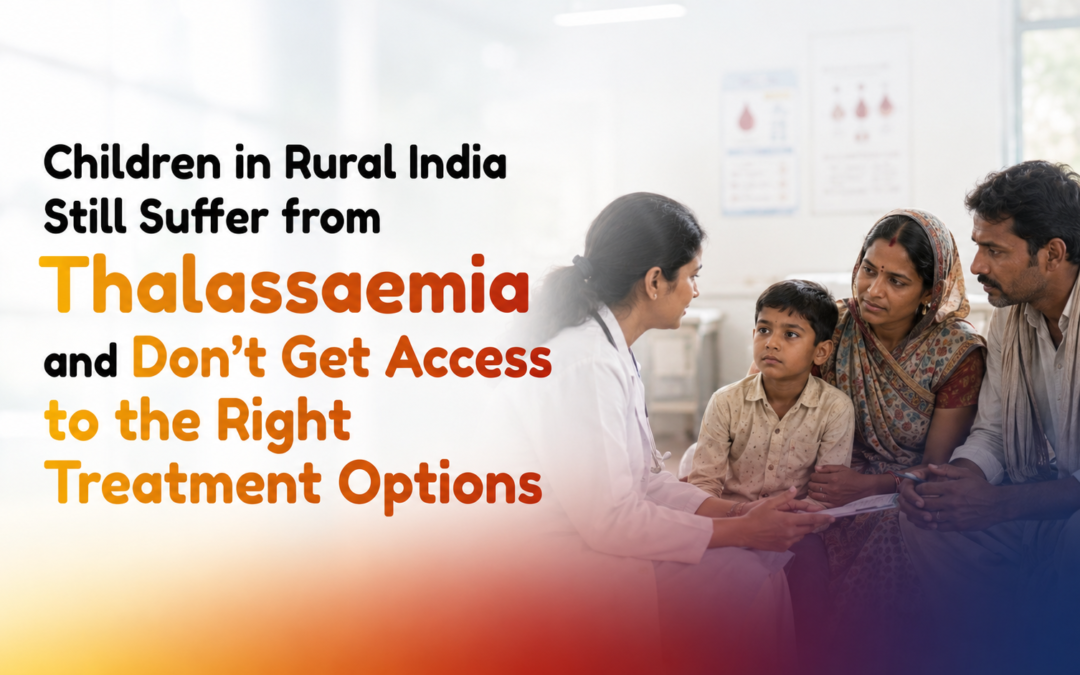
Despite significant advances in healthcare, many children in rural India diagnosed with Thalassaemia still struggle to receive proper and timely treatment.
While urban healthcare systems have improved access to specialized pediatric care, blood transfusion services, and long-term disease management, the reality in many rural and semi-urban regions remains extremely challenging.
For thousands of families, the problem is not just the disease itself.
The problem is:
- Lack of awareness
- Delayed diagnosis
- Financial burden
- Limited access to specialized treatment centers
- Inadequate long-term support systems
This gap continues to affect the quality of life and outcomes for children living with Thalassaemia in India.
What Is Thalassaemia?
Thalassaemia is a genetic blood disorder that affects the body’s ability to produce healthy hemoglobin.
Children with Thalassaemia Major often require:
- Regular blood transfusions
- Chelation therapy
- Ongoing monitoring
- Long-term pediatric hematology care
Without proper treatment, severe anemia and multiple complications can occur.
Why Is Rural India More Vulnerable?
One of the biggest challenges in rural India is lack of early awareness.
Many families are unaware about:
- Symptoms of Thalassaemia in children
- Importance of screening
- Need for regular transfusions
- Availability of specialized treatment
As a result:
- Children are diagnosed late
- Treatment gets delayed
- Complications increase
In several cases, families initially assume the child is suffering from:
- Weakness
- Malnutrition
- Poor immunity
without understanding the underlying blood disorder.
What Are the Major Challenges Faced by Families?
Families in rural and underserved areas often struggle with:
1. Limited Access to Specialized Care
Specialized pediatric hematology treatment may not be available nearby.
Parents often travel long distances for:
- Blood transfusions
- Specialist consultations
- Follow-up care
2. Financial Burden
Managing Thalassaemia treatment involves:
- Frequent hospital visits
- Blood transfusions
- Chelation medicines
- Investigations
- Travel expenses
For economically vulnerable families, long-term treatment becomes difficult to sustain.
3. Irregular Blood Availability
Access to safe and regular blood transfusion support remains inconsistent in several regions.
Delays in transfusion schedules can significantly affect the child’s health.
4. Lack of Counselling & Support
Many families:
- Feel isolated
- Lack disease understanding
- Struggle emotionally
Long-term illnesses affect not only the child, but the entire family structure.
Why Is Chelation Therapy Important?
Repeated blood transfusions can lead to iron overload in Thalassaemia.
Excess iron can affect:
- Heart
- Liver
- Hormonal system
This is why chelation therapy in Thalassaemia becomes essential.
However, access to chelation medicines remains difficult for many underprivileged families because of cost and availability.
How Are Non-Profits Helping Improve Access?
Organizations like the Happy Kids Foundation are working towards bridging these healthcare gaps.
HKF supports children through:
- Blood transfusion assistance
- Access to chelation medicines
- Counselling for families
- Medical guidance
- Long-term care coordination
- Awareness initiatives in rural communities
The goal is not only treatment support.
The larger goal is ensuring that children are not denied healthcare because of geography or financial limitations.
Why Is Awareness Still the Biggest Need?
Awareness directly improves:
- Early diagnosis
- Timely treatment
- Screening participation
- Disease prevention
In many cases, awareness alone can:
- Prevent complications
- Improve treatment continuity
- Encourage early intervention
This is why community-level awareness programs remain extremely important in rural India.
What Needs to Change Going Forward?
Improving Thalassaemia care in rural India requires:
- Better awareness campaigns
- Increased screening programs
- Stronger blood donation networks
- Access to affordable medicines
- More pediatric hematology support systems
- Better NGO and healthcare collaboration
The solution requires participation from:
- Healthcare professionals
- NGOs
- Communities
- Blood donors
- Policymakers
Final Thoughts from Happy Kids Foundation
No child should suffer because they were born far away from specialized healthcare facilities.
Children with Thalassaemia deserve:
- Timely diagnosis
- Consistent treatment
- Emotional support
- Access to quality care
Improving healthcare access in rural India is not only a medical responsibility.
It is a social responsibility.
And awareness remains the first step towards meaningful change.