
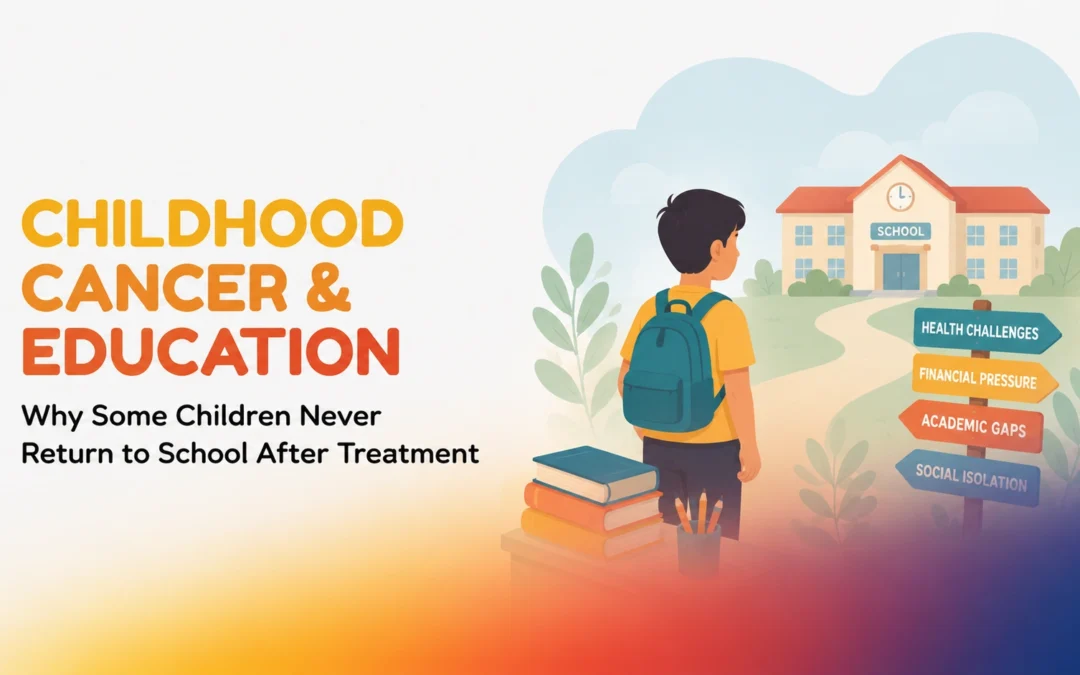
When a child finishes cancer treatment, everyone celebrates the same milestone: “The cancer is gone.” But for some children, another difficult question quietly remains—“Will I ever go back to school?”
For a child, school is much more than books and exams. It is friends, routine, confidence, play and a sense of belonging. Yet childhood cancer in India can interrupt education for months or even years. And sometimes, the child never returns at all.
Cancer Can Put Education on Pause
A child undergoing pediatric cancer treatment may spend months travelling to hospitals, receiving chemotherapy, recovering from surgery or dealing with treatment-related side effects.
Regular attendance becomes difficult.
Even when a child wants to study, fatigue, infections, hospital appointments and prolonged recovery can make a normal school routine almost impossible.
For families already struggling with the cost of cancer treatment, education may become a secondary priority. When parents are travelling between hospitals and home, managing medicines and trying to continue working, keeping up with schoolwork can feel like one more mountain to climb.
Then Comes the Gap
Imagine returning to your classroom after months away.
Your classmates have moved ahead. Lessons have changed. Friend groups may have changed too. You may feel older, physically different or simply out of place.
This is one reason cancer survivors and education need to be discussed together.
A child may have successfully completed treatment but still face:
- Learning gaps
- Difficulty concentrating
- Physical weakness or fatigue
- Fear of returning to school
- Anxiety about being treated differently
- Missed examinations or academic years
- Loss of confidence
The cancer may be in remission, but the educational disruption can continue.
What About the Child’s Friends?
Children often have questions when a classmate returns after cancer treatment.
Why does their friend look different?
Why are they tired?
Why did they miss so much school?
Why do they need special care?
Without age-appropriate awareness, curiosity can unintentionally become teasing, avoidance or stigma.
That is why school support for childhood cancer survivors matters. Teachers and classmates can play an important role in making the return feel normal rather than uncomfortable.
Parents Face a Difficult Choice Too
For many families, getting a child back into school is not as simple as filling out an admission form.
Treatment may have required relocation. Parents may have lost jobs. The family may have accumulated debt. A sibling’s education may also have been affected.
And if the child has missed a significant amount of schooling, parents may wonder whether returning to the same class is practical.
This is where childhood cancer support must go beyond medical care.
A complete support system should consider education, emotional wellbeing, rehabilitation and the child’s long-term development—not just whether the treatment has ended.
Education Should Be Part of Cancer Care
The goal of pediatric oncology should not end with survival.
It should include helping children return to the life they had before cancer—or build a new one without unnecessary barriers.
Schools can help through flexible attendance, academic catch-up plans, peer support, home-based learning during intensive treatment and sensitive reintegration after recovery.
NGOs and childhood cancer foundations can also help families with educational support, counselling and rehabilitation.
Because surviving cancer should not mean losing the opportunity to learn.
Final Thoughts
Every child deserves more than successful cancer treatment. They deserve the chance to continue their education, rebuild confidence and imagine a future beyond the hospital.
If a child survives cancer but loses their place in school, we have solved only half the problem.