Two people can look perfectly healthy, lead active lives, and have no idea that they carry a genetic blood disorder.
Sometimes, that information becomes important only when they plan to have a child.
This is why understanding the difference between thalassemia trait and thalassemia major — and considering carrier screening before pregnancy — can make a meaningful difference for families.
What Is Thalassemia?
Thalassemia is an inherited blood disorder that affects the body’s production of haemoglobin, the protein in red blood cells that carries oxygen.
The condition is passed through genes from parents to children. It is not contagious, and it is not caused by something a parent ate or did during pregnancy.
The severity depends on the type of thalassemia and the genetic changes inherited.
Thalassemia Trait vs Thalassemia Major: What Is the Difference?
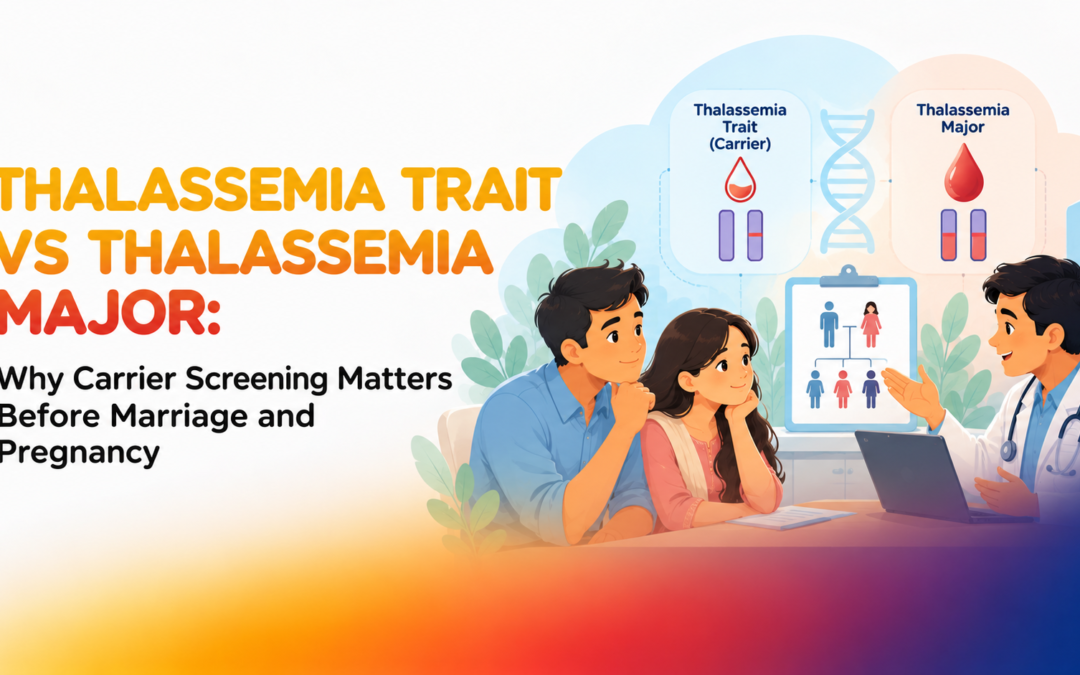
Thalassemia trait (carrier state)
A person with thalassemia trait has inherited a genetic change associated with thalassemia from one parent. Many carriers have no symptoms and live normal lives.
Some may have mild anaemia or smaller-than-usual red blood cells. This can sometimes be mistaken for iron deficiency.
Importantly, thalassemia trait does not usually require the lifelong blood transfusions associated with thalassemia major.
Thalassemia major
Thalassemia major is a severe form of the condition in which the body cannot produce enough functional haemoglobin.
Children with transfusion-dependent thalassemia may develop significant anaemia, tiredness, weakness, and poor growth without appropriate treatment. They commonly require regular blood transfusions, iron chelation therapy to manage excess iron, and ongoing specialist care.
For selected patients, a stem cell transplant may offer the possibility of a cure. Eligibility and outcomes depend on individual medical factors.
What Happens If Both Parents Are Carriers?
This is where thalassemia carrier screening becomes especially important.
For the common situation in which both biological parents carry a relevant disease-causing variant in the same thalassemia gene, each pregnancy has:
- A 25% chance of the child inheriting the affected variants from both parents and having the corresponding disease.
- A 50% chance of the child inheriting one affected variant and being a carrier.
- A 25% chance of the child inheriting neither of those variants.
These probabilities apply separately to every pregnancy. They do not predict which outcome will occur in an individual child.
The exact risks can differ with other genetic combinations, which is why genetic counselling and appropriate testing matter.
Why Should Screening Happen Before Marriage or Pregnancy?
Thalassemia screening before marriage or pregnancy can help couples understand their carrier status before making reproductive decisions.
It is not about judging a relationship or discouraging marriage. It is about giving both partners accurate information and the opportunity to plan.
Depending on the person’s history and initial results, screening may include a complete blood count, haemoglobin analysis such as HPLC or electrophoresis, and genetic testing when indicated.
If one partner is identified as a carrier, testing the other partner is important. If both carry relevant variants, a genetic counsellor or specialist can explain reproductive options, including prenatal diagnosis and preimplantation genetic testing where appropriate and available.
A normal-looking blood report or the absence of symptoms does not always rule out carrier status.
Can Thalassemia Be Prevented?
Parents cannot change the genes they carry. However, awareness, screening, and informed reproductive planning can help families understand the risk of having a child with severe thalassemia.
For children already living with thalassemia major, regular transfusion support, iron chelation, specialist monitoring, and assessment for suitable advanced treatment options are essential parts of care.
Early diagnosis and consistent treatment can help prevent complications and improve quality of life.
Final Thoughts
Thalassemia trait is not the same as thalassemia major, and being a carrier is not a reason for shame.
The important step is knowing your status and understanding what it means for your future family.
A simple screening discussion before pregnancy can provide information that might otherwise remain unknown until a child is diagnosed.
At Happy Kids Foundation, we believe awareness, accessible testing, and ongoing support can help families make informed decisions and ensure that children living with thalassemia receive the care they deserve.