
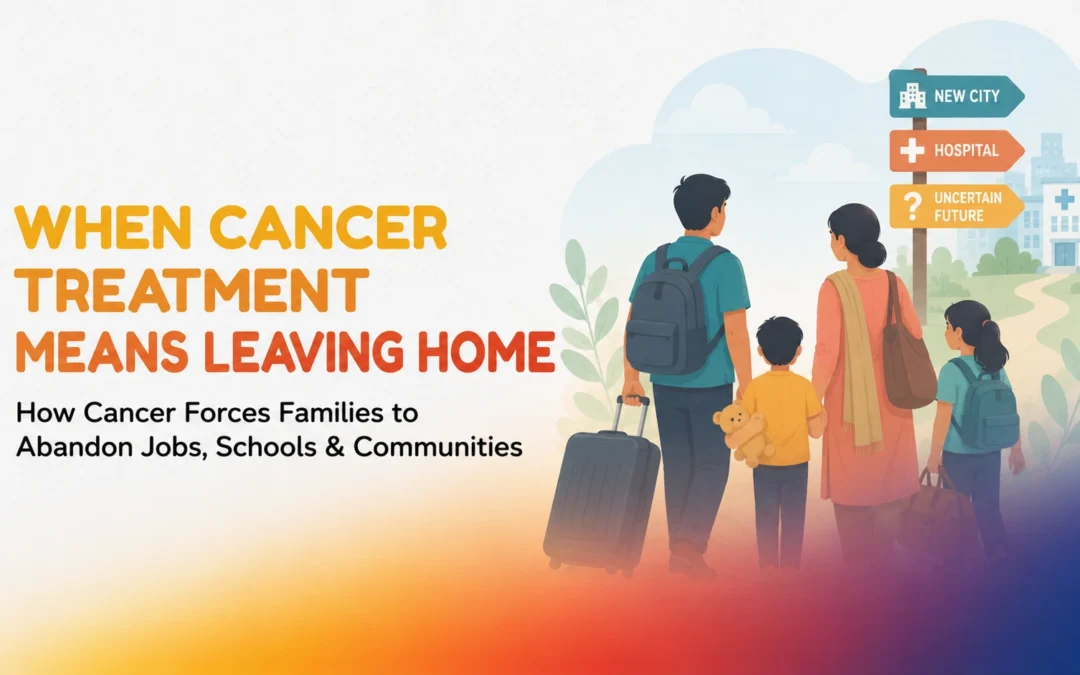
When a child is diagnosed with cancer, the family prepares to fight for one thing: the child’s life.
But sometimes, fighting cancer means leaving almost everything else behind.
For families who live far from specialised pediatric cancer treatment, travelling to a major cancer centre can become a necessity. What begins as a hospital visit can turn into weeks or months away from home—away from jobs, schools, relatives, neighbours and the community that once made everyday life feel normal.
For many families, childhood cancer in India is not just a medical journey.
It is a relocation journey.
When Home Becomes Too Far Away
Specialised childhood cancer treatment may require repeated hospital visits, chemotherapy cycles, surgery, radiation or long-term follow-up.
For a family living in a smaller town or rural area, travelling back and forth may be difficult, expensive and exhausting.
So they move closer to the hospital.
One suitcase.
A few clothes.
Important medical reports.
And an uncertain return date.
What happens next is rarely discussed.
One Parent May Have to Leave Work
Cancer treatment can demand a parent’s constant presence.
Appointments can take hours. Hospital admissions can last days. Treatment schedules may change unexpectedly.
Someone has to be there.
Often, that means one parent reduces working hours, takes extended leave or leaves their job altogether.
For families already managing the cost of cancer treatment, losing an income can create another layer of stress.
The family isn’t only paying for treatment.
They may also be paying with lost wages.
What Happens to the Other Children?
While one child receives pediatric oncology care, siblings may remain at home with grandparents or relatives.
Their school routine may continue—but their family life has changed.
Some children may miss school because they move temporarily. Others may take on responsibilities at home that they did not have before.
This is why childhood cancer support should not focus only on the child undergoing treatment.
The whole family needs support.
Communities Can Disappear From Everyday Life
There is another loss that doesn’t appear on a medical bill: belonging.
A family that relocates for months may miss festivals, family gatherings, school events and important moments in the lives of relatives.
Parents may feel isolated.
Children may lose contact with friends.
And the temporary accommodation near a hospital may never truly feel like home.
This social disruption is one of the hidden costs of cancer treatment for children.
Treatment Should Not Mean Losing Everything Else
A good cancer support system can make this journey less disruptive.
Families may need:
- Affordable accommodation near hospitals
- Transportation assistance
- Financial support during treatment
- Flexible workplace policies
- Educational support for siblings
- Counselling and psychosocial care
- Nutrition assistance
- Rehabilitation and follow-up support
This is where childhood cancer NGOs and community organisations can make a meaningful difference.
Sometimes, helping a family stay near a hospital is just as important as helping them reach the hospital.
Final Thoughts
When a family leaves home for cancer treatment, they are not simply changing their address.
They may be leaving behind a job, a classroom, a support system and a familiar way of life.
The fight against childhood cancer in India therefore cannot stop at medicines and medical procedures.
Families need practical, financial and emotional support throughout the journey.
Because saving a child’s life is the first goal.
Helping the family hold on to the rest of their life is part of the same fight.