
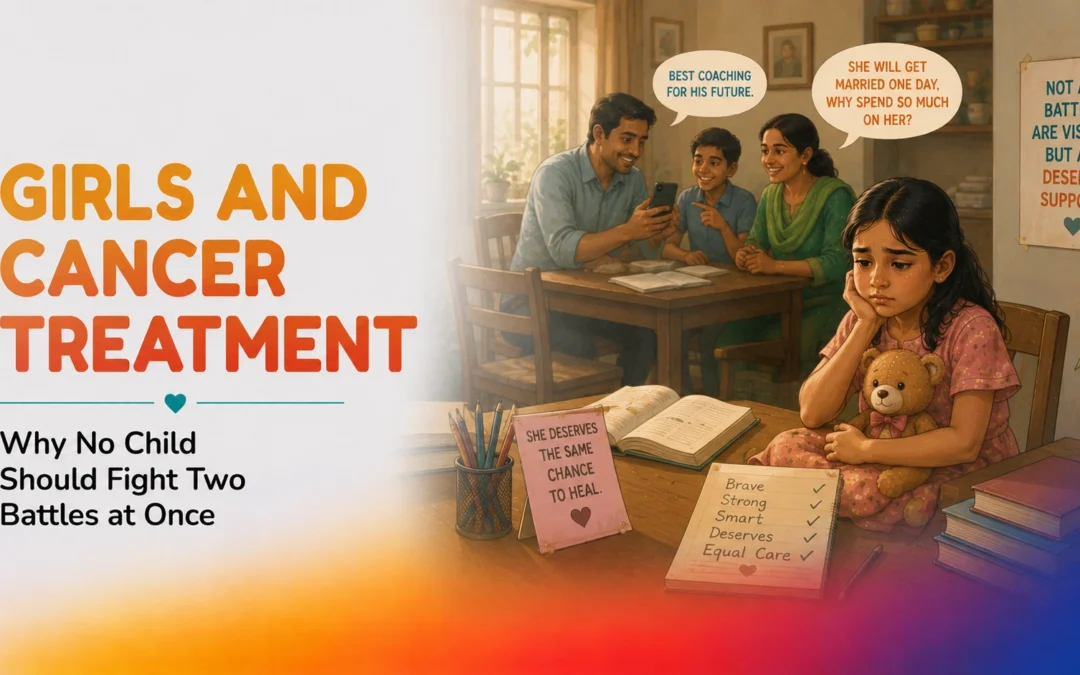
Imagine two children diagnosed with the exact same type of cancer.
Both need chemotherapy.
Both need surgery.
Both have an equal chance of recovery if treatment begins on time.
But one child reaches the hospital quickly.
The other reaches months later—because she is a girl.
It sounds unbelievable, but for thousands of families, this is still a painful reality.
Childhood cancer does not choose between boys and girls. Cancer cells do not discriminate. Unfortunately, society sometimes does.
Even today, many girls in India face delayed diagnosis, interrupted treatment, or complete abandonment of care—not because medicine failed them, but because gender bias did. While awareness around childhood cancer has improved over the years, the fight against social inequality remains just as important. Organizations like Happy Kids Foundation continue working to ensure that every child receives timely treatment and support, irrespective of gender or financial background.
When Cancer Meets Gender Bias
When parents hear the word “cancer,” everything changes.
Hospital visits replace school.
Medicines replace playtime.
Dreams suddenly revolve around survival.
For most parents, the only thought is:
“How do we save our child?”
But for some families, another question quietly appears.
“Is it worth spending everything… if the child is a girl?”
It’s uncomfortable to even read that sentence.
Yet it reflects a reality many healthcare professionals and NGOs encounter while working with underprivileged communities.
The Treatment Isn’t Different. The Opportunity Is.
Here’s the truth. Doctors don’t prescribe different chemotherapy because the patient is a
girl. They don’t perform different surgeries. They don’t reduce medicines. Medical science treats boys and girls equally. The difference begins outside the hospital.
Girls are more likely to experience:
- Delayed medical consultation
- Missed follow-up appointments
- Interrupted chemotherapy cycles
- Financial prioritization toward male siblings
- Poor nutrition during treatment
- Emotional neglect
The disease is the same. The opportunities aren’t.
“Let’s Wait and See”
One of the biggest reasons childhood cancer gets diagnosed late is delay. Parents may initially dismiss symptoms like:
- Persistent fever
- Bone pain
- Unexplained bruising
- Swelling
- Weight loss
- Constant tiredness
But studies and field experience show that delays can become even longer when these symptoms appear in girls because healthcare often becomes a lower priority in financially challenged households. Early diagnosis significantly improves treatment outcomes in childhood cancers.
The Hidden Cost of Cancer
Cancer treatment is expensive.
Even when hospitals and charitable organizations provide financial support, families still struggle with:
- Travel expenses
- Accommodation
- Daily wage loss
- Medicines
- Nutrition
- Blood transfusions
- Follow-up visits
When resources become limited, difficult choices are sometimes made. Sadly, daughters may receive fewer opportunities simply because of deeply rooted social beliefs rather than medical necessity. This is exactly why financial assistance programs exist—not just to pay hospital bills, but to remove barriers that prevent children from completing treatment.
The Emotional Burden Girls Carry
Cancer affects much more than the body. Young girls often worry about things adults rarely notice.
Will my hair grow back?
Will I look different?
Can I go back to school?
Will my friends still talk to me?
Will people think I’m weak?
Hair loss during chemotherapy, prolonged hospital stays, and social isolation can deeply affect confidence, especially during adolescence. These children need counselling, encouragement, education, and emotional support just as much as medicines. Healing isn’t only physical.
Education Often Becomes the Next Casualty
Many girls already face challenges in accessing education. Add cancer to the equation, and school often stops completely.
Months of treatment can result in:
- Dropping out
- Learning gaps
- Reduced confidence
- Social isolation
- Loss of future opportunities
Returning to school after cancer should be seen as a milestone-not a struggle. Every child deserves both survival and a future.
Rural Families Face Even Bigger Challenges
Children living in villages and remote areas often reach treatment centres after weeks or months.
Reasons include:
- Limited awareness
- Lack of pediatric cancer specialists
- Long travel distances
- Financial hardship
- Fear of treatment
- Social myths
For girls, these barriers can become even more severe. The journey to treatment becomes longer before it even begins.
Myths That Continue to Hurt Girls
Several misconceptions still exist in society.
Some families believe:
- “She’ll get married someday, so spending so much isn’t practical.”
- “Cancer can’t really be cured.”
- “Treatment is only suffering.”
- “Girls are naturally weaker.”
None of these statements are true. Childhood cancers are often highly treatable, especially when diagnosed early and managed by pediatric oncology teams.
Conclusion
A girl diagnosed with cancer doesn’t need sympathy because she is a girl. She needs timely diagnosis because she is a child. She needs treatment because she deserves to live.
She needs hope because her dreams matter just as much as anyone else’s.
The day we stop asking whether a child is a son or a daughter before deciding their treatment is the day we truly begin winning the fight—not just against childhood cancer, but against inequality itself.