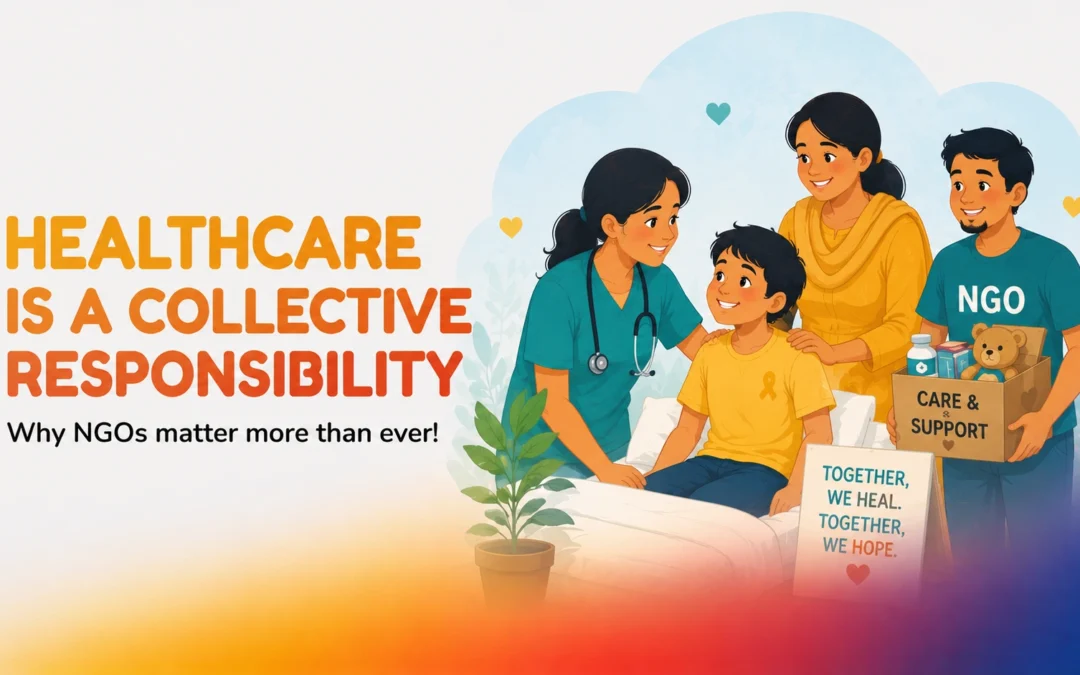
Healthcare is often viewed as a service delivered by hospitals, doctors, nurses, and healthcare institutions.
While these professionals form the backbone of medical care, the reality is that healthcare extends far beyond hospital walls. Access to treatment, financial support, awareness, rehabilitation, nutrition, emotional care, and community assistance all play a critical role in determining health outcomes.
In an ideal world, every child and every family would have equal access to quality healthcare regardless of their financial circumstances or geographical location.
Yet for millions of people, that reality remains out of reach.
This is where non-governmental organizations (NGOs) become indispensable.
By addressing gaps that traditional healthcare systems cannot always fill, NGOs help ensure that vulnerable children and families receive the support they need. Today, their role is more important than ever.
Healthcare Challenges Go Beyond Medical Treatment
When a child is diagnosed with a serious illness, treatment is only one part of the journey. Families often face additional challenges such as:
- Financial hardship
- Travel and accommodation expenses
- Lack of healthcare awareness
- Delayed diagnosis
- Nutritional deficiencies
- Emotional stress
- Educational disruptions
Even when quality medical care is available, these barriers can prevent families from accessing or completing treatment.
Healthcare therefore requires solutions that address both medical and non-medical needs. NGOs play a vital role in providing this broader support.
Bridging the Gap Between Need and Access
Many families know their child needs treatment but struggle to access it.
Some live far from specialized healthcare centers. Others lack the financial resources required for long-term treatment. Many are unaware of available support programs or healthcare services.
NGOs help bridge these gaps by connecting families with resources, guidance, and assistance. Their efforts often include:
- Financial support for treatment
- Patient navigation services
- Awareness campaigns
- Accommodation assistance
- Nutritional support
- Counselling services
- Community outreach programs
By reducing barriers, NGOs help children receive care that might otherwise remain inaccessible.
Supporting Children Beyond the Hospital
Children facing serious illnesses require more than medical interventions.
Their recovery and well-being are influenced by several factors, including nutrition, emotional health, family stability, education, and social support.
Many healthcare-focused NGOs recognize this reality and adopt a holistic approach to care. Their programs may support:
- Children undergoing cancer treatment
- Patients with blood disorders
- Children requiring long-term rehabilitation
- Families facing financial hardship
- Children at risk of treatment abandonment
This comprehensive support helps improve both treatment experiences and long-term outcomes.
Creating Awareness That Saves Lives
One of the most powerful contributions NGOs make is raising awareness.
Many serious illnesses can be treated more effectively when detected early. However, delayed diagnosis remains a significant challenge due to limited awareness about symptoms, available healthcare services, and the importance of timely medical intervention.
Through educational initiatives, community outreach, workshops, and public campaigns, NGOs help families recognize warning signs and seek medical attention sooner.
Awareness is often the first step toward better health outcomes.
And in many cases, it can save lives.
Strengthening Communities Through Collective Action
Healthcare cannot be sustained by healthcare professionals alone.
Strong healthcare systems depend on active participation from communities, volunteers, donors, educators, businesses, and social organizations.
NGOs create opportunities for people to contribute in meaningful ways.
Individuals can support healthcare initiatives through:
- Donations
- Blood donation drives
- Volunteering
- Fundraising campaigns
- Awareness programs
- Corporate social responsibility initiatives
When communities come together, they create support systems that benefit children and families facing difficult circumstances.
This collective effort strengthens healthcare far beyond what any single institution can achieve.
Why NGOs Are More Important Today
Modern healthcare is becoming increasingly advanced, but it is also becoming increasingly complex and expensive.
Families navigating serious illnesses often require assistance that extends beyond clinical treatment. At the same time, healthcare disparities continue to affect vulnerable populations, particularly children from economically disadvantaged backgrounds.
NGOs help address these challenges by:
- Expanding access to healthcare
- Supporting underserved communities
- Reducing financial barriers
- Advocating for patient needs
- Mobilizing community resources
Their work ensures that healthcare remains compassionate, inclusive, and accessible. In a rapidly changing world, this role has never been more important.
Every Contribution Creates Impact
The success of healthcare-focused NGOs depends on collective participation.
Every donation, volunteer effort, awareness campaign, blood donation, and fundraising initiative contributes to a larger mission: helping children and families access the care they deserve.
Many people underestimate the impact of individual contributions. Yet countless healthcare journeys have been transformed because someone chose to help.
Small actions, when multiplied across communities, create extraordinary outcomes.
Healthcare Is Everyone’s Responsibility
Healthcare is not solely the responsibility of hospitals, governments, or healthcare professionals.
It is a shared responsibility that belongs to all of us.
When children face serious illnesses, they need more than medicine. They need support systems that help families navigate financial, emotional, and practical challenges. They need communities that care. They need organizations willing to step forward when help is needed most.
This is why NGOs matter.
They remind us that healthcare is not only about treating disease—it is about supporting people.
And when communities, healthcare providers, donors, volunteers, and NGOs work together, we move closer to a future where every child has the opportunity to receive the care, dignity, and hope they deserve.