
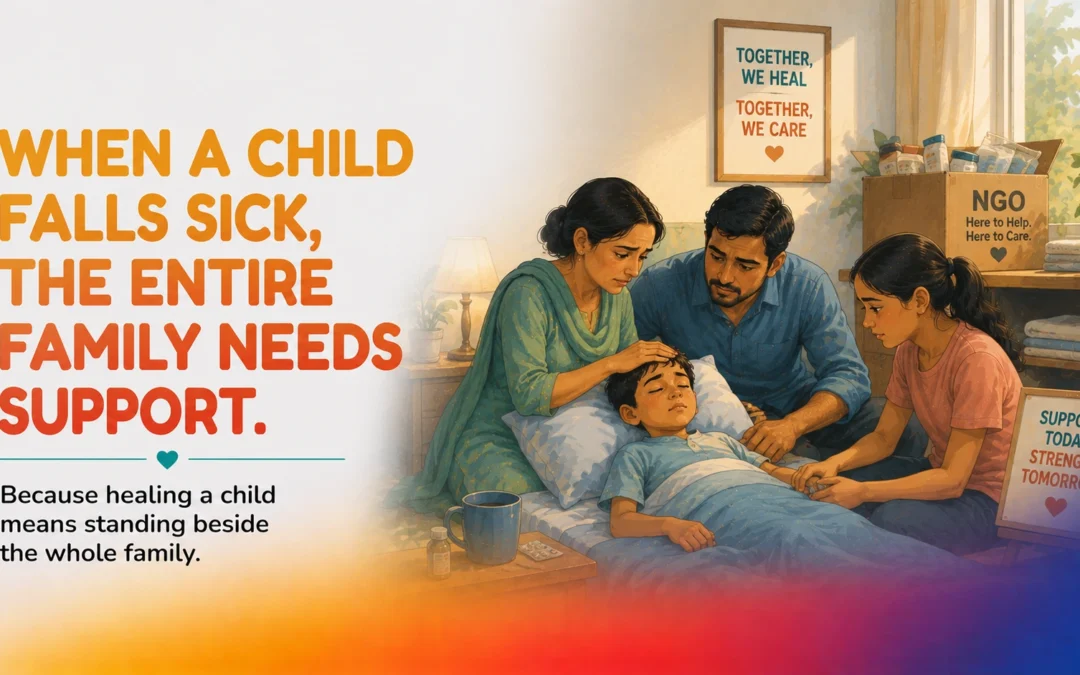
When a child is diagnosed with a serious illness, the focus naturally shifts to treatment, recovery, and medical care.
Doctors, nurses, medications, tests, and hospital visits become part of daily life. Everyone’s attention is centered on helping the child get better.
But behind every child receiving treatment is a family quietly navigating its own challenges.
Parents carry the weight of difficult decisions. Siblings struggle to understand sudden changes at home. Grandparents worry while trying to provide support. Daily routines are disrupted, financial pressures increase, and emotional stress becomes a constant companion.
The reality is simple: when a child falls sick, the entire family is affected.
That is why supporting the child alone is not enough. Families need care, guidance, and support too.
The Emotional Impact on Parents
For most parents, hearing that their child has a serious illness is one of the most difficult moments they will ever experience.
Alongside concerns about treatment and recovery, parents often experience:
- Fear about the future
- Anxiety about medical decisions
- Emotional exhaustion
- Feelings of helplessness
- Uncertainty about finances
- Stress from balancing family responsibilities
Many parents try to remain strong for their child while silently carrying an immense emotional burden.
Over time, this constant pressure can affect their mental well-being, physical health, and ability to cope with daily challenges.
Providing emotional support to parents is an essential part of caring for a child with a serious illness.
Siblings Are Affected Too
When one child becomes seriously ill, siblings often experience major changes in their lives.
Parents may need to spend extended periods at hospitals, family schedules become unpredictable, and attention is naturally focused on the child receiving treatment.
As a result, siblings may experience:
- Feelings of loneliness
- Confusion about the illness
- Anxiety and fear
- Changes in school performance
- Feelings of guilt or neglect
Although their struggles may be less visible, siblings also need reassurance, communication, and emotional support throughout the treatment journey.
Helping siblings feel included and understood can strengthen the entire family’s ability to cope.
The Financial Strain on Families
Medical treatment often brings significant financial challenges.
Beyond hospital bills, families may face additional expenses such as:
- Travel to treatment centers
- Accommodation near hospitals
- Loss of income due to caregiving responsibilities
- Nutritional support
- Additional childcare needs
- Follow-up care and rehabilitation
For many households, these expenses create financial stress that extends well beyond the treatment period.
Financial assistance programs, charitable organizations, and community support can help reduce some of these burdens, allowing families to focus more fully on their child’s recovery.
The Importance of Family-Centered Care
Modern pediatric healthcare increasingly recognizes that treating a child means supporting the entire family.
Family-centered care acknowledges that parents and caregivers play a critical role in treatment and recovery. It encourages collaboration between healthcare teams and families while addressing emotional, educational, social, and practical needs.
This approach may include:
- Psychological counselling
- Caregiver education
- Support groups
- Nutritional guidance
- Social work services
- Financial assistance programs
When families feel supported, they are better equipped to help their child through treatment and recovery.
Why Community Support Matters
No family should have to face a child’s illness in isolation.
Communities can make a tremendous difference by offering practical and emotional support during difficult times.
Simple acts such as:
- Organizing fundraising initiatives
- Assisting with transportation
- Providing meals
- Donating blood
- Offering emotional encouragement
- Volunteering time and resources
Can help reduce stress and remind families that they are not alone.
Support often extends far beyond financial contributions. Sometimes knowing that others care can provide strength during the most challenging moments.
The Role of NGOs and Support Organizations
Many organizations work tirelessly to support children with serious illnesses and the families who care for them.
Their services often include:
- Financial assistance
- Accommodation support
- Counselling services
- Educational guidance
- Nutritional support
- Patient navigation assistance
By addressing challenges beyond medical treatment, these organizations help families maintain stability and hope throughout the treatment journey.
Comprehensive support improves not only the patient’s experience but also the well-being of the entire family.
Healing Involves More Than Medicine
Medical treatment is essential, but healing involves much more than prescriptions and procedures.
Children recover best when surrounded by emotionally supported caregivers, stable family relationships, and a strong support system. Parents who feel empowered, siblings who feel included, and families who feel understood are better positioned to navigate the challenges of serious illness.
Healthcare must therefore extend beyond the hospital room.
It must recognize the emotional, social, and practical realities families face every day.
Supporting the Child Means Supporting the Family
When a child falls sick, every member of the family begins their own journey.
Parents become caregivers, advocates, and decision-makers. Siblings adapt to new realities. Extended family members step into supporting roles. Together, they face uncertainty while holding onto hope.
By providing emotional support, financial assistance, community resources, and compassionate care, we help families carry a burden they should never have to carry alone.
Because treating a child is only part of the mission.
Supporting the family is what makes healing truly possible.