
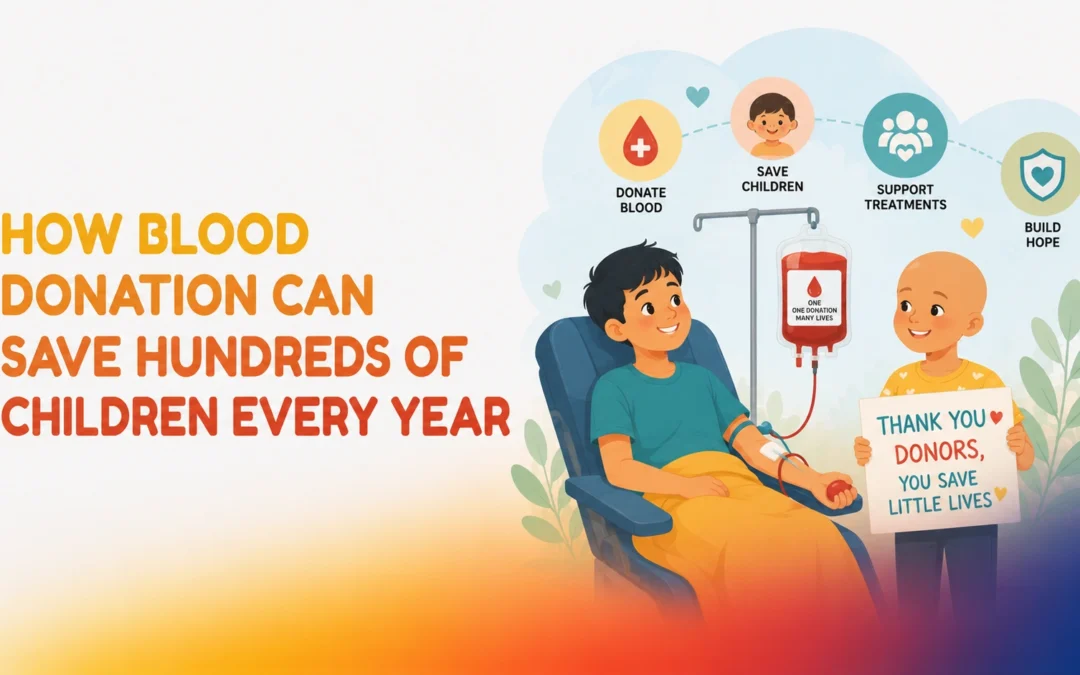
Every day, somewhere in a hospital, a child is waiting for blood.
For many children battling cancer, blood disorders, severe infections, trauma, or undergoing major surgeries, blood transfusions are not optional—they are essential. A single blood donation can become a lifeline that helps a child continue treatment, recover from illness, or survive a medical emergency.
Yet most people only think about blood donation when someone close to them needs it.
The truth is that thousands of children depend on voluntary blood donors every year. Behind countless recovery stories are individuals who chose to donate blood, often without ever knowing whose life they helped save.
Why Children Need Blood Transfusions
Blood transfusions are a critical part of modern pediatric healthcare.
Children may require blood products for several reasons, including:
- Childhood cancers such as leukemia and lymphoma
- Thalassemia and other inherited blood disorders
- Severe anemia
- Major surgeries
- Bone marrow disorders
- Serious infections and medical emergencies
- Trauma and accident-related injuries
For many of these conditions, treatment cannot continue safely without a reliable supply of blood and blood components.
Childhood Cancer and the Need for Blood Donation
Children undergoing cancer treatment often require repeated blood transfusions throughout their treatment journey.
Chemotherapy, while targeting cancer cells, can also affect the body’s ability to produce healthy blood cells. As a result, children may need:
- Red blood cell transfusions to combat severe anemia
- Platelet transfusions to reduce bleeding risks
- Plasma support in specific medical situations
A shortage of blood products can lead to treatment delays, which may affect recovery and overall outcomes.
This is why regular blood donation remains a vital part of supporting children fighting cancer.
One Donation Can Help Multiple Patients
Many people are surprised to learn that a single blood donation can benefit more than one patient.
After collection, donated blood is separated into different components such as:
- Red blood cells
- Platelets
- Plasma
Each component serves a different medical purpose and may be used for different patients based on their needs.
This means one act of donation has the potential to impact multiple lives, including children receiving treatment for serious illnesses.
The Need Is Constant
Unlike many medical supplies, blood cannot be manufactured.
Hospitals and blood banks rely entirely on voluntary donors to maintain adequate supplies. Since certain blood components have limited storage life, regular donations are necessary to ensure availability when patients need them.
Medical emergencies do not wait for blood drives.
Children undergoing treatment need access to safe blood products throughout the year, making consistent donor participation incredibly important.
Common Reasons People Avoid Donating Blood
Despite the need, many eligible individuals hesitate to donate blood.
Some common concerns include:
- Fear of needles
- Worry about weakness after donation
- Lack of information about eligibility
- Misconceptions about the donation process
- Simply waiting until someone they know requires blood
In reality, blood donation is a safe and carefully monitored procedure for healthy donors. Most individuals can return to their normal routine shortly after donating.
Awareness and education play a key role in encouraging more people to become regular donors.
The Power of Community Participation
A strong culture of voluntary blood donation benefits everyone.
When communities actively participate in blood donation drives, hospitals are better equipped to meet the needs of patients requiring urgent care.
Every blood donor contributes to a healthcare system that is more prepared, responsive, and capable of supporting vulnerable patients, especially children.
Whether the recipient is a child undergoing chemotherapy, a teenager with thalassemia, or a young patient recovering from surgery, donated blood can make a life-changing difference.
Blood Donation Is More Than a Medical Act
While blood donation has obvious medical benefits, it also represents something deeper. It is an act of compassion from one individual to another.
Donors may never meet the children they help, but their contribution becomes part of a family’s story of hope, resilience, and recovery. During some of the most difficult moments in a parent’s life, access to blood products can provide reassurance that treatment can continue without interruption.
Few acts of kindness have such a direct and immediate impact.
A Small Commitment, A Lifesaving Impact
The process of donating blood takes only a short amount of time, but its impact can last far longer.
For a child receiving treatment, that donation may help restore strength, support recovery, reduce complications, or provide another opportunity to continue fighting a serious illness.
Hundreds of children benefit from blood donations every year because ordinary people choose to make an extraordinary difference.
By donating blood regularly and encouraging others to do the same, we can help ensure that no child has to wait for the blood they need.
Because for many children, hope is not only found in medicine—it is also found in the generosity of strangers.